What Are Blowjob Bars?
You might have heard the term blowjob bars in movies, late-night talk shows, or gritty crime dramas. These establishments are a specific type of adult venue where customers pay for oral sex services. Unlike traditional strip clubs that focus on dancing and lap dances, these venues operate on a model of direct sexual contact. They were most prominent in the United States during the 1980s and early 1990s before facing intense legal crackdowns.
The concept is often misunderstood by those who haven't studied the history of adult entertainment. It wasn't just about sex; it was a business model that tried to exist in the gray area between prostitution laws and free speech protections. Understanding what they were requires looking at how they operated, why they emerged, and why they largely disappeared from mainstream view.
The Rise in the 1980s
The 1980s saw an explosion in the adult entertainment industry. Video stores boomed, porn magazines became ubiquitous, and live venues started pushing boundaries. In cities like Los Angeles, New York, and Miami, entrepreneurs opened venues that offered more than just visual stimulation. The idea was simple: charge high cover fees and drink minimums, then allow patrons to engage in sexual acts with performers.
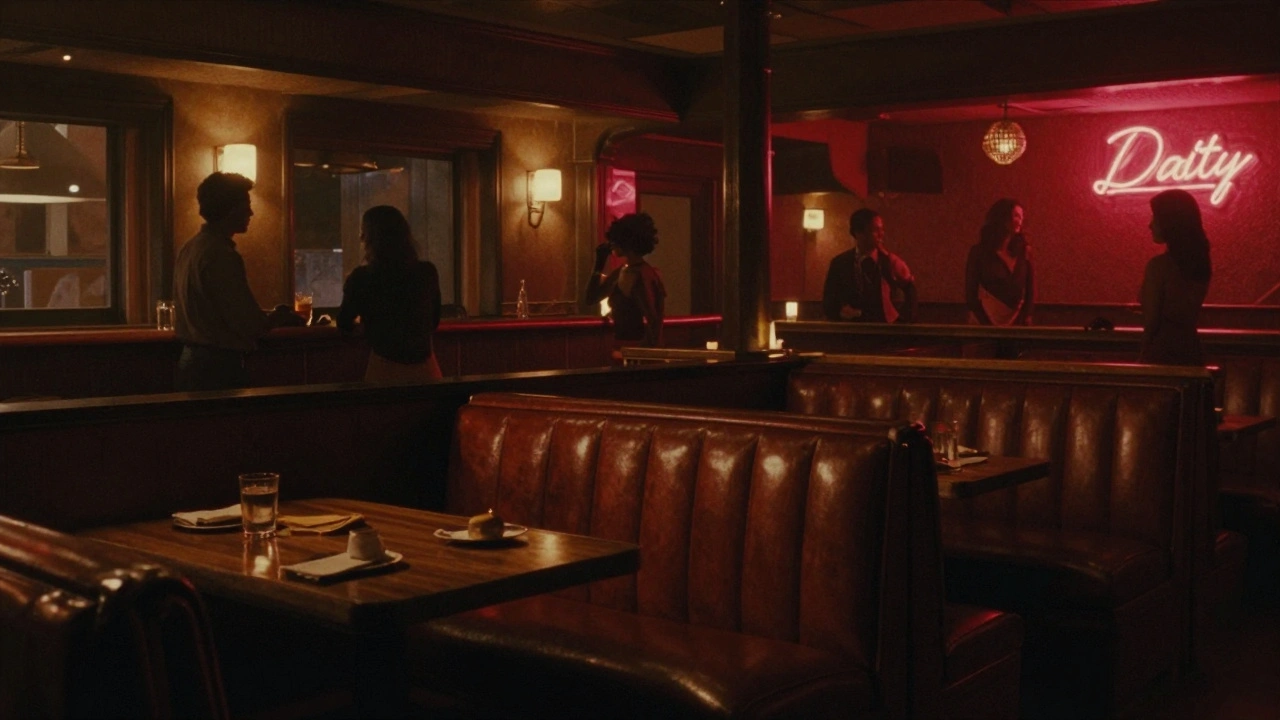
These places often looked like upscale lounges rather than seedy dens. Dim lighting, leather booths, and expensive liquor menus created an atmosphere of exclusivity. Performers, often referred to as 'girls' or 'hosts,' would provide oral sex to clients in private booths or semi-private areas. The business model relied heavily on alcohol sales and high-volume turnover.
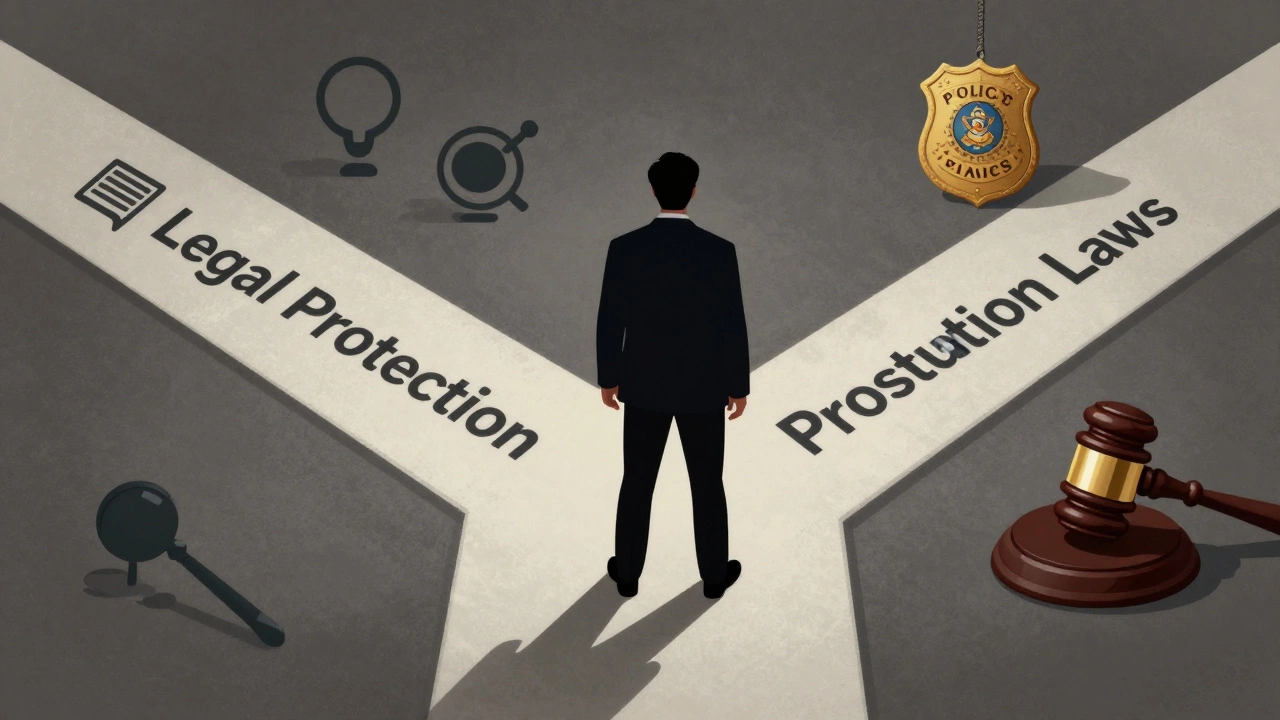
This era coincided with a shift in societal attitudes toward sexuality, though not necessarily acceptance. People were more open to discussing sex, but the law remained strict. Prostitution-defined as exchanging money directly for sex-was illegal in almost all of the US. So, these bars tried a loophole: you paid for drinks and admission, not specifically for the act. The sex was presented as a 'gift' or part of the experience.
Legal Challenges and Crackdowns
The legal system didn't take kindly to this workaround. Police departments across the country began targeting these venues. The primary charge was usually operating a brothel or facilitating prostitution. Even if no direct cash exchange for sex was proven, authorities argued that the high cover charges and mandatory drink purchases constituted payment for sexual services.
Courts generally sided with law enforcement. Judges ruled that the 'loophole' was too thin. If the primary purpose of the establishment was sexual gratification, and money changed hands to access that service, it violated anti-prostitution statutes. By the mid-1990s, most major blowjob bars had been shut down or forced to change their operations significantly.
Some venues tried to pivot. They stopped offering oral sex and focused on lap dances and exotic dancing. This brought them under the umbrella of First Amendment protections established in cases like *Barnes v. Glen Theatre, Inc.* (1991), which recognized nude dancing as expressive conduct. However, full-contact sexual acts remained firmly outside legal protection.
Comparison with Other Adult Venues
| Venue Type | Primary Service | Legality in US | Contact Level |
|---|---|---|---|
| Strip Club | Dancing, Lap Dances | Legal (regulated) | Limited/No Contact |
| Blowjob Bar | Oral Sex | Illegal (prostitution) | Full Contact |
| Brothel | Sexual Services | Legal only in NV counties | Full Contact |
| Peep Show | Visual Performance | Legal (regulated) | No Contact |
As the table shows, the key differentiator is physical contact. Strip clubs and peep shows rely on visual performance. Brothels offer full services but are confined to specific jurisdictions. Blowjob bars attempted to bridge the gap, offering contact without being classified as brothels, but ultimately failed legally.
Current Status and Underground Operations
Today, explicit blowjob bars are virtually non-existent in the United States. The legal risks are too high. Owners face prison time, heavy fines, and asset forfeiture. Performers risk criminal records for prostitution charges. However, elements of the model persist underground.
Some illicit massage parlors operate similarly, charging high fees for massages that include sexual services. These venues are harder to detect because they don't advertise openly. Police sting operations are common, but these businesses adapt quickly, moving locations and using coded language online.
In other parts of the world, the landscape differs. Countries with legalized or decriminalized sex work handle such services differently. For instance, in some regions of Asia, establishments may offer similar services openly or through discreet arrangements. A search for terms like Bangkok escort often leads to platforms that facilitate connections for various types of companionship and services, reflecting a different regulatory environment compared to the US.
Even in places with stricter laws, the demand remains. This drives innovation in how services are marketed and delivered. Online platforms now play a huge role, allowing individuals to arrange meetings privately. This shifts the risk from a centralized business owner to individual workers and clients.
Social and Ethical Debates
The existence of blowjob bars sparked heated debates about morality, women's rights, and public safety. Critics argued that these venues exploited women, contributing to human trafficking and drug addiction. Many performers did come from vulnerable backgrounds, seeking quick money in a difficult economy. The power dynamics were often skewed, with owners controlling finances and schedules.
Supporters, however, pointed out that many women chose this work voluntarily. They argued that criminalization made the industry more dangerous by driving it underground. Without regulation, there was no oversight for health standards or labor rights. Performers couldn't report abuse or theft without risking arrest themselves.
This debate continues today in the broader context of sex work legalization. Should the government regulate sexual services like any other business? Or does state intervention inherently harm workers? Different countries have taken different approaches. New Zealand decriminalized sex work in 2003, leading to improved safety conditions. Conversely, Sweden adopted a model that criminalizes buying sex but not selling it, aiming to reduce demand.

Impact on Modern Nightlife
The closure of blowjob bars changed the nightlife landscape. Strip clubs adapted by focusing on entertainment value. Some introduced 'fully clothed' dancers or themed nights to attract a wider audience. Others embraced technology, offering virtual experiences or streaming services.
Red light districts in major cities evolved. Instead of overt sexual services, they became hubs for bars, clubs, and hotels catering to adults. The line between legitimate nightlife and illicit activity blurred. Hotels in these areas often turned a blind eye to activities happening behind closed doors, creating a de facto tolerance zone.
For consumers, the options narrowed but also diversified. You can still find places that push boundaries, but they operate with caution. Discretion is key. Many modern venues use vague marketing language, hinting at 'private sessions' or 'VIP experiences' without explicitly stating what happens. This ambiguity helps them avoid legal scrutiny while attracting curious customers.
Global Perspectives
While the US clamped down, other nations maintained or expanded their adult industries. In Germany, sex work is fully regulated, with workers paying taxes and having labor rights. Japan has a complex system where certain acts are banned, but others are tolerated in designated zones. Thailand offers a mix of legal tourism and informal services, where visitors might look for an escort Bangkok service to navigate the local scene.
These global differences highlight how culture and law shape sexual commerce. In societies where sex work is accepted, venues operate openly, with health checks and licensing. In restrictive environments, the same services move into shadows, increasing risks for everyone involved.
Travelers should always research local laws before visiting adult venues. What is permissible in one city can be a serious offense in another. Misunderstanding regulations can lead to detention, deportation, or criminal charges.
The Future of Adult Entertainment
Technology continues to reshape the industry. Virtual reality (VR) and artificial intelligence (AI) offer new ways to simulate intimacy without physical presence. VR porn allows users to interact with digital partners in immersive environments. AI chatbots provide emotional connection and conversation, blurring the lines between human and machine interaction.
Will this replace physical venues? Probably not entirely. Human touch and real-world interaction remain unique. But tech reduces the need for risky offline encounters. For those seeking convenience and safety, digital alternatives are growing rapidly.
Physical venues will likely continue to evolve within legal constraints. Expect more emphasis on entertainment, socializing, and ambiance. The raw transactional nature of past decades is giving way to experiences that feel less exploitative and more consensual. Whether this shift is genuine or just marketing remains a subject of discussion among sociologists and activists.
Are blowjob bars still legal in the US?
No, they are not legal. Operating a venue where sexual acts are exchanged for money violates federal and state prostitution laws. Most such establishments were shut down in the 1990s.
What happened to the blowjob bars of the 1980s?
They faced intense police crackdowns and court rulings that classified their operations as prostitution. Most closed permanently or converted into standard strip clubs.
How do modern strip clubs differ from old blowjob bars?
Modern strip clubs focus on dancing and limited contact (like lap dances). They avoid full sexual acts to stay within legal boundaries protected by free speech laws.
Where is sex work legal in the US?
Prostitution is legal only in certain rural counties in Nevada. All other states prohibit exchanging money for sexual services.
Do blowjob bars exist in other countries?
In some countries with legalized or decriminalized sex work, similar services may be available openly or through regulated agencies. Laws vary widely by region.
Write a comment